
Blocks
Pattern-making blocks generally refer to the individual pieces that
together create a sloper. Blocks do not contain seam allowances, hems, or facings. Sometimes, block and sloper are used interchangeably. However, in the apparel industry, there is a distinct difference.
Terminology

Apex
The highest point of a dart or a curve.
Armscye
The point on a pattern in which the sleeve is sewn.
Triangular elements of a pattern that when sewn enable a flat,
two-dimensional pattern piece to take shape on a three-dimensional
figure. Not all garments use darts. For example, knit wear does not
require as much built-in shaping as a woven fabric would need.
Blend
Blending is a process of smoothing and shaping lines to create a smooth transition from one point to another. Similarly, blending can occur when connecting two separate lines or curves to create a pattern pieces. An example of this would be connecting a bodice block to a skirt block to make a dress. This is usually done using the common pattern making rulers.
Dart Leg
Two lines that come together at a specific point to create a dart.
Dart Intake
The portion of the fabric between the dart legs to remove excess fabric and create shape.
Bust Point
A designated place on a pattern that is generally used as a pivotal
point. For example; when moving a dart to a new location on a bodice.
The amount of extra fabric that is built into the pattern to allow the garment to fix in a relaxed position.A woven pattern would have positive ease, where a knit pattern would have negative ease.
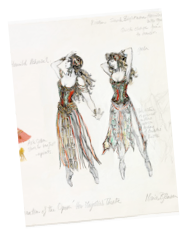
A diagonal line across the grain of the fabric. A bias cut is generally used in knits and has a desirable drape that fits closely to the curves of the body.
Grading
The process of creating the sizing of a pattern.

Facing
An extra pattern pieces that is used to stabilize an area of a
garment. Facings are often used around curved areas such as neck and arm openings.
Reprinted by permission - ©2019 Isn't that Sew, LLC -

Page 34
Page 33

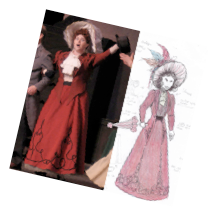

Costume Design