Makeup






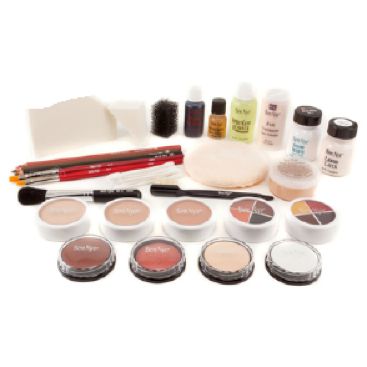
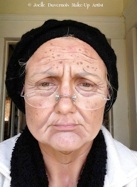
The basic concepts of stage makeup and regular makeup are the same—they are used to create an illusion. ... Most often, everyday makeup is simply used to hide blemishes or flaws and highlight one's natural beauty. Stage makeup can be used for dramatic effects and tends to be much heavier than everyday makeup.
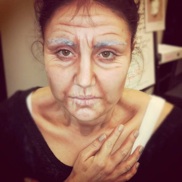
Stage makeup is supposed to counteract the effect of stage lighting and distance on the features of the face. It also can alter features of the face to better suit a character, exaggerate features for dramatic or comedic effect, create the illusion of old age/bad health (or youth/good health if need be) etc., and create fantastic effects.
Stage lighting flattens the face and washes out the features. Hence, thick foundation, often in a darker shade than the actor's natural skin tone, is required to counteract the effect. Strong lines around the eyes and the mouth aid in redefining what bright lights and distance blur out. Contouring aids in recreating the dimensions of the face that the lighting flattens. Colors are brighter because they too are washed out by strong lighting. Highlights and shadows and/or prosthetics can create character, fantasy, or age effects if need be.
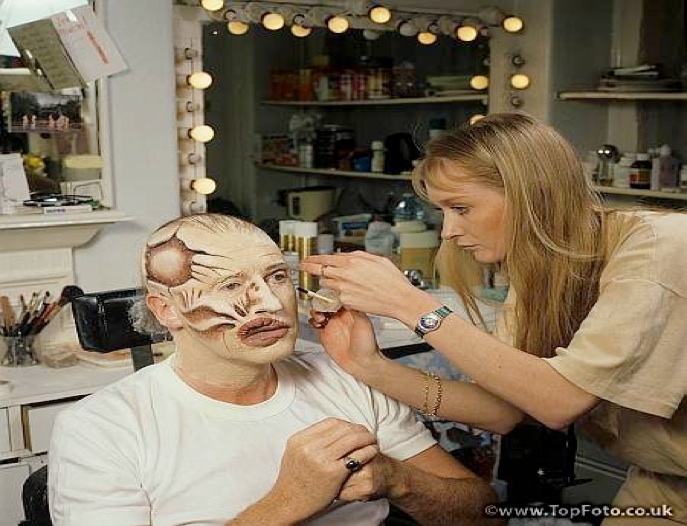
Theatrical makeup refers to makeup that is used to assist in creating the appearance of the characters that actors portray during a theater production.
Highlight and shadow
Through the use of makeup, specifically highlighting and shading, the apparent shape of an actor’s face can be changed. By highlighting the face's protruding bones, the features become pronounced; shadowing cavities can add depth. Sagging jowls, forehead wrinkles, eye pouches, and prominent veins can be created by manipulating highlights and shadows. A highlight is a base makeup that is at least two shades lighter than the base. It is applied on the bridge of the nose, cheekbones, and areas under the eyes and below the brows.[4] Using a color two shades deeper than the base provides depth and definition. This depth is commonly used on the eye sockets, to thin the sides of the nose, to shallow the cheeks, and to minimize heaviness under the chin.
From Wikipedia, the free encyclopedia

From Wikipedia, the free encyclopedia